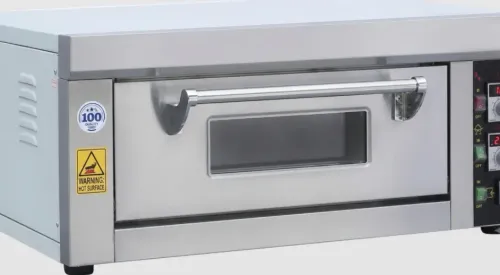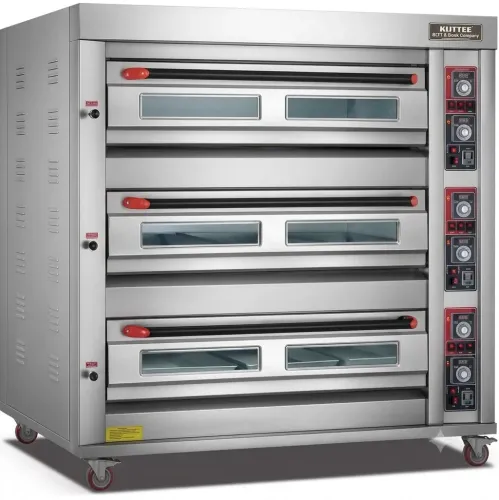
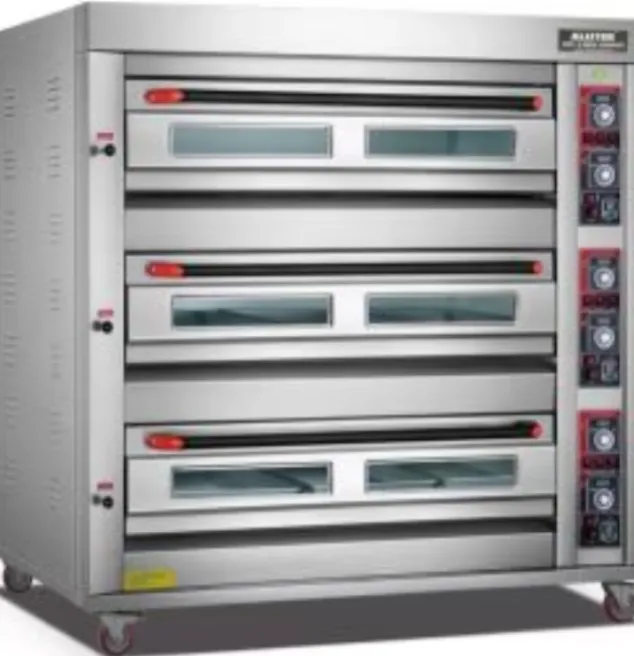
Production growth creates a positive challenge for bakery owners. More orders can increase revenue potential, but existing equipment may begin limiting output. A Convection Bakery Oven machine is one option businesses may evaluate when expanding cake, cookie, pastry, similar bakery production.
The important question is whether the machine matches the bakery's actual production profile.
Understand Convection Baking
Convection ovens use circulated heated air within the baking chamber.
Air movement is intended to support heat distribution during baking. This makes convection equipment relevant to many commercial bakery applications.
However, operators still need correct product spacing, suitable temperature settings, appropriate tray loading.
Equipment technology cannot compensate for poorly standardised production methods.
Identify Your Main Products
List your highest-volume products.
Convection baking may be considered for items such as:
- Cookies
- Cakes
- Cupcakes
- Pastries
- Buns
- Selected bread products
- Savoury bakery items
Product size plus recipe can influence required settings.
A bakery should therefore test plus standardise operating procedures after installation.
Look at Batch Requirements
Calculate how much product must be baked per hour during normal production.
Then calculate peak requirements.
A cake business may experience high demand around festivals plus celebrations. A bakery supplying retail counters throughout Nagpur may have fixed morning dispatch deadlines.
Your equipment should support the production schedule without requiring unrealistic loading practices.
Measure the Installation Area
Before requesting a quotation, measure:
- Floor space
- Doorway dimensions
- Working clearance
- Nearby preparation areas
- Rack movement space
- Utility access
Do not assume equipment can simply be placed wherever space appears available.
Commercial kitchens work better when product movement follows a logical sequence.
Review Controls
Staff should be able to operate the machine consistently.
Ask how temperature plus other relevant settings are controlled. Determine how operators monitor the baking process.
Simple, clear procedures make training easier.
If multiple employees use the oven, written product settings can reduce unnecessary variation between shifts.
Calculate Whether Expansion Is Actually Needed
Sometimes the existing oven is not the main bottleneck.
Before purchasing additional capacity, review production data.
Check whether delays occur during mixing, shaping, proofing, baking, cooling, packing.
If the oven consistently operates at practical capacity while other stages can support greater output, an upgrade may be justified.
If another stage is limiting production, solving that bottleneck may provide greater value.
Consider Long-Term Utilisation
Commercial machinery should ideally be used enough to justify the investment.
Estimate how frequently the oven will operate after installation.
Also consider planned product launches, wholesale accounts, additional branches.
Realistic utilisation estimates are more valuable than optimistic growth assumptions.
Prepare Before Contacting a Manufacturer
Bakery owners can make supplier discussions more productive by preparing:
- Daily output
- Peak output
- Product list
- Tray requirements
- Available space
- Utility details
- Working hours
- Expected growth
For businesses in Nagpur, Vaibhav Enterprises provides commercial bakery equipment for different production needs.
A business searching for a Convection Bakery Oven machine should share these operational details so equipment selection can focus on practical requirements.
Growth does not always require the biggest machine available. It requires capacity at the right stage of production.
By examining product mix, batch volume, workspace, staff procedures, actual bottlenecks, bakery owners can make equipment investments that fit their current operation while leaving sensible room for future expansion.
Keywords