

Preparing dough is one of the most important stages in commercial baking. Even when the recipe is perfect, inconsistent dough portions can affect the size, texture, baking time, and overall appearance of the final product. For bakeries producing hundreds or thousands of bread rolls, buns, pizzas, or pastries every day, manually dividing dough can become both time-consuming and inconsistent. A Dough Divider helps simplify this process by producing uniform dough portions quickly and accurately.
As commercial bakeries continue to expand in Nagpur and throughout Maharashtra, many businesses are replacing manual dough cutting methods with automated bakery equipment to improve consistency and increase production capacity. Understanding the differences between manual dough division and a dough divider can help bakery owners make an informed investment.
Why Dough Portioning Matters
Every baked product begins with accurately measured dough. If one dough ball weighs more than another, the products may bake differently, leading to inconsistent size, colour, and texture.
Proper dough portioning helps achieve:
- Uniform product size
- Consistent baking time
- Better product presentation
- Accurate ingredient usage
- Reduced wastage
- Predictable production planning
For bakeries supplying supermarkets, cafés, hotels, or institutional buyers, maintaining this consistency is essential for customer satisfaction.
What Is a Dough Divider?
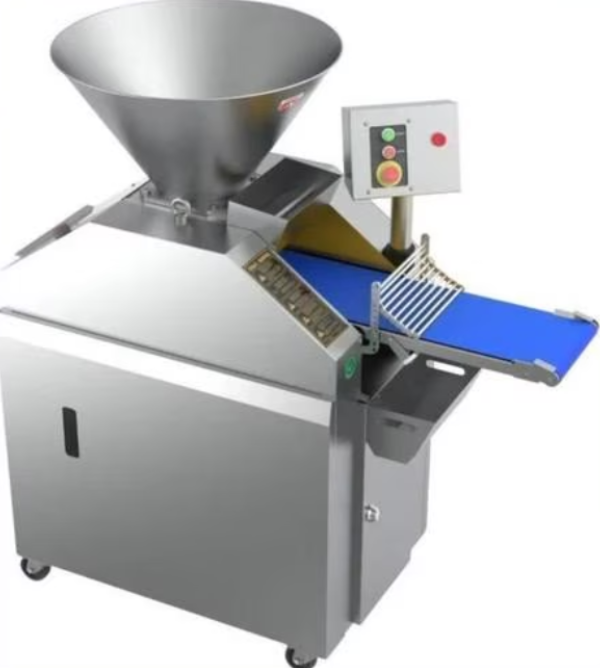
A Dough Divider is a commercial bakery machine designed to divide a large quantity of prepared dough into equal portions within a short period. Instead of manually weighing and cutting individual pieces, the machine performs the process with greater speed and accuracy.
Depending on the model, a dough divider can produce multiple equal portions in a single cycle, making it suitable for continuous commercial production.
It is commonly used for preparing dough for:
- Bread rolls
- Burger buns
- Pizza bases
- Pav
- Dinner rolls
- Sweet buns
- Stuffed breads
- Bakery snacks
Manual Dough Cutting vs Dough Divider
Speed
Manual cutting requires operators to measure, cut, and adjust every dough piece individually. This process becomes slower as production increases.
A Dough Divider can portion multiple pieces in one operation, significantly reducing preparation time.
Accuracy
Even experienced bakers may produce slight weight variations when dividing dough manually.
A machine ensures every portion remains nearly identical, supporting consistent baking results.
Labour Efficiency
Manual portioning requires continuous operator involvement.
Using a dough divider allows bakery staff to focus on fermentation, shaping, baking, and packaging while the machine handles repetitive dividing tasks.
Product Consistency
Uniform dough weight helps produce baked products with similar:
- Volume
- Texture
- Colour
- Baking time
- Appearance
Consistency is particularly important for businesses selling packaged bakery products.
Benefits of Investing in a Dough Divider
Increased Production Capacity
Automated portioning enables bakeries to prepare larger quantities of dough in less time.
Reduced Product Waste
Accurate portion sizes help minimise excess dough usage and reduce ingredient losses.
Better Workflow
Production becomes more organised because dough preparation is completed faster, allowing the next stages of baking to begin without unnecessary delays.
Consistent Customer Experience
Customers appreciate receiving products that maintain the same size and quality every time they purchase them.
Easier Production Planning
Uniform dough weights improve inventory management and make production scheduling more predictable.
Who Should Consider a Dough Divider?
This equipment is suitable for:
- Commercial bakeries
- Bread manufacturers
- Pizza production units
- Hotel bakeries
- Cloud kitchens
- Food processing companies
- Catering businesses
- Bakery training institutes
As bakery production continues to increase across Maharashtra, automated dough handling equipment is becoming an important part of efficient commercial operations.
Features to Consider Before Buying
Choosing the right Dough Divider depends on production requirements and available workspace.
Important factors include:
- Portion weight range
- Number of divisions per cycle
- Machine capacity
- Stainless steel construction
- Ease of cleaning
- Safety features
- Operational simplicity
- Maintenance requirements
- Availability of technical support
Selecting equipment that matches production goals helps improve long-term operational efficiency.
Best Practices for Effective Use
To achieve consistent performance, operators should follow recommended operating procedures.
Some useful practices include:
- Prepare dough with the recommended consistency.
- Avoid exceeding the machine's capacity.
- Clean food-contact components after every production cycle.
- Inspect blades and moving parts regularly.
- Follow preventive maintenance schedules.
- Train staff on correct machine operation.
- Replace worn components promptly.
Routine maintenance contributes to reliable performance and extends equipment life.
Frequently Asked Questions
Can a Dough Divider handle different types of dough?
Yes. Many commercial models are designed to process various bread and bakery doughs, although very soft or specialised recipes may require specific machine settings.
Does the machine reduce product quality?
No. It improves consistency by ensuring equal dough portions. The final quality still depends on the recipe, fermentation, and baking process.
Is it suitable for medium-sized bakeries?
Yes. Dough dividers are available in different capacities, making them suitable for both growing businesses and high-volume commercial production.
Does it require extensive maintenance?
Regular cleaning and routine servicing are generally sufficient to maintain efficient performance.
Choosing the Right Equipment Partner
Commercial bakery equipment represents a long-term investment, making supplier selection an important decision. Buyers should evaluate product quality, after-sales support, operator training, spare parts availability, and technical assistance before purchasing.
Many bakery businesses in Nagpur rely on experienced equipment suppliers such as Vaibhav Enterprises, which offers a variety of commercial bakery machinery designed for different production needs. Equipment specifications and available models can also be reviewed through vaibhavbakeryequipment.com to help businesses select machinery suited to their production requirements.
A Dough Divider offers commercial bakeries an efficient way to improve consistency, increase production speed, and reduce manual effort. For businesses aiming to deliver uniform bakery products while supporting long-term operational growth, automated dough portioning is a practical and valuable investment.