

As bakery businesses expand, production demands increase significantly. Preparing larger batches of bread, biscuits, cakes, buns, and other baked products requires equipment that can deliver consistent results without slowing down operations. For high-volume commercial baking, a Rotary Rack Oven Machine has become one of the most widely used solutions because it combines large baking capacity with uniform heat distribution.
Many commercial bakeries in Nagpur and across Maharashtra are upgrading to rotary rack ovens as customer demand grows and product consistency becomes increasingly important. Before making this investment, bakery owners should understand how the machine works, its advantages, and the factors that influence the right purchasing decision.
What Is a Rotary Rack Oven Machine?
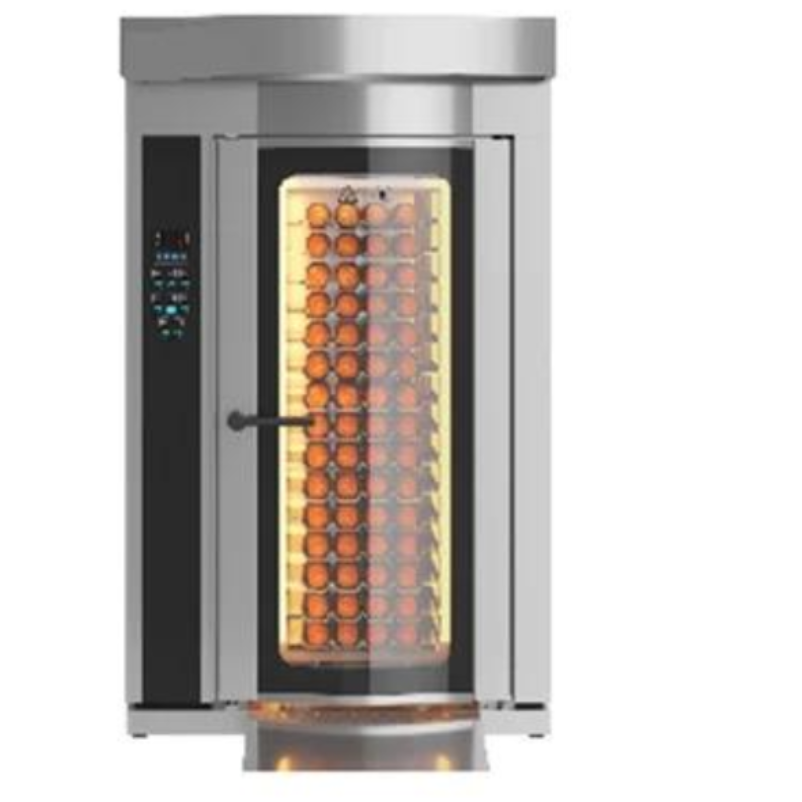
A Rotary Rack Oven Machine is a commercial baking oven designed to bake large quantities of products simultaneously. Instead of placing trays individually inside the oven, an entire rack loaded with multiple trays is wheeled into the baking chamber. During baking, the rack rotates continuously, allowing heat to circulate evenly around every tray.
This rotating mechanism helps produce consistent baking results throughout the rack, making the machine ideal for large-scale bakery production.
It is commonly used for baking:
- Bread loaves
- Burger buns
- Pav
- Cookies
- Biscuits
- Cakes
- Muffins
- Rusk
- Bakery snacks
- Sweet buns
Its ability to accommodate high production volumes makes it suitable for commercial manufacturing environments.
Why Even Baking Is Important
In high-capacity production, uneven heat distribution can result in products that are overbaked on some trays and underbaked on others. This inconsistency can affect product quality, customer satisfaction, and production efficiency.
A Rotary Rack Oven Machine helps achieve:
- Uniform colour
- Even texture
- Consistent baking
- Better crust development
- Reliable product quality
- Reduced product rejection
These advantages are especially valuable for bakeries supplying supermarkets, distributors, hotels, and institutional customers.
Benefits of Using a Rotary Rack Oven Machine
High Production Capacity
One of the biggest advantages of a rotary rack oven is its ability to bake large quantities in a single cycle, reducing production time while increasing output.
Uniform Heat Distribution
The rotating rack ensures that all trays receive similar heat exposure, improving consistency across every batch.
Improved Productivity
Loading an entire rack instead of individual trays saves valuable production time and simplifies bakery operations.
Versatility
The oven can bake a wide range of bakery products, allowing businesses to diversify their offerings without investing in separate baking systems.
Reduced Labour Requirements
Simplified loading and unloading reduce manual handling and help improve workflow during busy production schedules.
Industries That Benefit from Rotary Rack Ovens
A Rotary Rack Oven Machine is widely used in:
- Commercial bakeries
- Bread manufacturing units
- Biscuit manufacturers
- Cake production facilities
- Hotel bakeries
- Institutional kitchens
- Food processing companies
- Large catering operations
As the bakery sector continues to grow across Maharashtra, rotary rack ovens are increasingly becoming an essential part of large-scale production facilities.
Factors to Consider Before Purchasing
Every bakery has unique production requirements, so selecting the right oven involves evaluating more than just capacity.
Key considerations include:
- Rack size and capacity
- Heating efficiency
- Temperature control system
- Steam generation capability
- Chamber insulation
- Energy consumption
- Ease of cleaning
- Safety features
- Maintenance requirements
- Availability of technical support
Businesses planning future expansion should also consider whether the selected oven can accommodate increasing production demands.
Best Practices for Efficient Operation
Proper operation helps maximise performance while extending equipment life.
Recommended practices include:
- Preheat the oven before loading products.
- Arrange trays evenly throughout the rack.
- Avoid exceeding the recommended rack capacity.
- Clean the baking chamber regularly.
- Inspect door seals and rotating mechanisms periodically.
- Follow preventive maintenance schedules.
- Train operators on temperature and steam settings.
Routine servicing helps reduce unexpected downtime and supports consistent baking performance.
Frequently Asked Questions
Can a Rotary Rack Oven bake different products?
Yes. It is suitable for a wide variety of bakery products, including bread, buns, cakes, cookies, biscuits, and pastries.
Is it suitable for medium-sized bakeries?
While commonly used in high-volume bakeries, smaller-capacity models are also available for growing commercial businesses.
Why is rack rotation important?
Continuous rack rotation allows heat to circulate more evenly, helping ensure consistent baking across every tray.
Does it require specialised maintenance?
Regular cleaning, inspection of moving components, and scheduled servicing are generally sufficient to maintain reliable performance.
Choosing the Right Equipment Supplier
A commercial baking oven is a long-term investment, making supplier selection just as important as equipment specifications. Buyers should evaluate installation support, operator training, after-sales service, spare parts availability, and technical assistance before making a purchase.
Many bakery manufacturers in Nagpur choose experienced suppliers such as Vaibhav Enterprises, which offers commercial bakery machinery designed for businesses with varying production capacities. Buyers can also review available equipment and technical specifications through vaibhavbakeryequipment.com to compare models based on their operational requirements.
A Rotary Rack Oven Machine provides commercial bakeries with the capacity, consistency, and efficiency needed for large-scale production. As bakery businesses continue to expand across Nagpur and Maharashtra, investing in the right baking equipment can help improve operational performance, maintain product quality, and support sustainable business growth.