Consistent dough comes from controlling temperature, hydration, ingredient order and the physical mixing endpoint—not from copying one timer setting between batches. You will be able to set a repeatable formula, adjust water for each flour delivery, read the dough as it develops and choose a mixer that suits your products and batch sizes.
Key takeaways
- Keep each batch within the mixer’s effective working range.
- Calculate water temperature to reach your target final dough temperature.
- Stop mixing when the dough shows the right elasticity, smoothness and development.
- Record batch results, ingredient changes and mixing times for repeatability.
Build a Repeatable Mixing Formula Before You Start the Machine
Use a batch size within the spiral mixer’s effective working range, not simply below its advertised maximum. An underloaded spiral may fail to catch enough dough for proper folding, while an overloaded bowl leaves dry flour pockets and strains the drive.
- Weigh flour, water, yeast, salt and fat separately. Calculate hydration percentage as water weight ÷ flour weight × 100, then adjust the water for the flour’s measured water absorption rather than repeating one fixed quantity.
- Add flour and about 90% of the water to the bowl. Add yeast with the water, unless your formula specifies direct mixing with flour.
- Mix slowly until no loose flour remains and the dough becomes shaggy. Add the remaining water gradually to eliminate dry patches without making a wet core.
- Add salt after the flour is moistened, then add softened fat once the dough has begun forming. Fat added too early can coat flour and delay gluten development.
- Scrape the bowl and spiral if flour collects on the sides. Weigh the finished dough and record the water, flour lot and mixing stages.
Set a target final dough temperature before mixing: 24–27°C for bread, 23–26°C for pizza, and 18–21°C for biscuits or cookies. Measure flour, room and water temperatures, then adjust the water temperature to reach that target; temperature changes alter flour absorption, water absorption and dough consistency.
Control Final Dough Temperature and Calculate Water Temperature
Set a target final dough temperature before mixing, then calculate water temperature instead of guessing it. Use the dough temperature method:
Water temperature = (target final dough temperature × number of temperature factors) − measured temperatures of flour, room, preferment and other ingredients − friction factor.
Count every temperature factor included in your formula. The friction factor is the heat added by the spiral mixer, not a universal machine constant. Establish it through trial runs for the specific mixer, speed program and batch size, then record the result in degrees.
- Measure flour temperature before loading.
- Measure room temperature beside the mixer.
- Measure preferment, fat or other temperature-sensitive ingredients.
- Use temperature-controlled water, then verify it with a thermometer before adding.
Incoming water can change between morning, afternoon and seasons, especially in Indian installations. A controlled water source and measured ingredients produce steadier dough than repeatedly changing mixing time. A warm room or hot motor can push dough past the target even when the timer is unchanged.
Hold back a controlled portion of water when flour absorption varies between lots, and add it after initial incorporation if the dough needs it. Do not correct a slack or dry batch with an unmeasured late addition.
Check the dough at discharge and again after a fixed rest or fermentation interval. Record final dough temperature, mixing stages and times, dough weight, flour lot and post-mix observations; later slackness can indicate temperature drift, acidity, enzyme activity or incomplete hydration.
Use Spiral-Mixer Speeds and Dough Cues to Find the Endpoint
Change from slow speed to fast speed after the flour and liquid have formed a cohesive mass with no dry pockets. Slow speed distributes flour, water, yeast and salt; fast speed supplies the mechanical work needed for gluten development. Starting fast can overheat dough, smear fat, or damage a deliberately short structure.
Use these physical cues rather than trusting the timer:
- Under-mixed dough looks rough or shaggy, tears quickly when stretched, and leaves dry or uneven patches. It feels sticky or lumpy because the gluten network has not formed.
- Developed dough feels smooth, elastic and cohesive. A lean bread dough should stretch into a thin, translucent windowpane before tearing; pizza, laminated and short doughs need less development and should stop earlier.
- Over-mixed dough often feels excessively warm, tight or sticky after first appearing smooth. It loses strength, tears after becoming difficult to stretch, or turns slack and smeared as the gluten breaks down.
Mixing time is a repeatability aid, not proof of completion. Flour temperature, hydration, dough load, ingredient temperature and line voltage change the endpoint, so record the final dough temperature and the physical cue you observed.
Set separate endpoints for each formula. Sugar competes for water, fat lubricates and shortens development, and salt tightens gluten while affecting yeast activity; brioche and sweet dough cannot use a lean-bread schedule unchanged. Recheck the dough after its fixed rest, because temperature and hydration equilibration can reveal a later change in strength.
Match Batch Size, Dough Type and Mixer Design to the Product
A 55% hydration dough is far harder on the drive than a 70% dough of the same weight. Stiff dough increases torque demand and the friction effect, while very wet dough can smear around the bowl before the hook gathers it. Match the recipe, not just the dough weight, to the machine rating.
Treat nominal bowl capacity as a volume reference, not a production target. Ask for the minimum batch size, maximum dough load, and reference hydration used for each rating. An underloaded spiral may fail to catch enough dough for proper folding; an overloaded bowl leaves flour pockets, raises drive load and creates an underdeveloped centre.
Before buying, request these figures in writing:
- Dough weight range for your actual hydration and flour type
- Bowl speed and hook speed at each mixing stage
- Motor or drive rating for stiff dough
- Whether the stated capacity means dough weight or flour weight
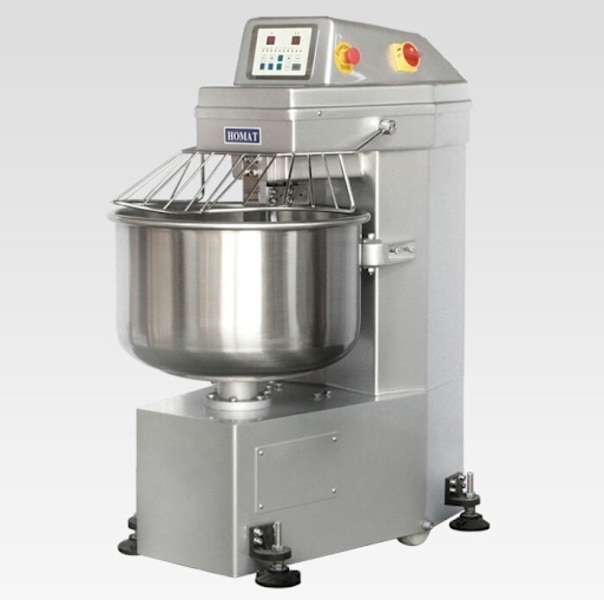
The bowl speed and hook speed determine how quickly dough circulates through the working zone. Use a spiral mixer for repeated bread, pizza or other gluten-developed doughs; its folding action gives better repeatability than a planetary mixer at substantial batch sizes.
Choose a planetary mixer for small batches, cake batters, fillings or cookie creaming, where a spiral hook is the wrong tool.
Vaibhav Enterprises can help you compare a listed mixer’s nominal capacity with your minimum production batch and actual dough hydration, rather than choosing by catalogue size alone.
Related products
 | Spiral Dough Mixers Material Stainless Steel (SS) Bowl Type Fixed Bowl Usage/Application Commercial / Large Power Source Electric Automation Grade Automatic Capacity... View product → |
 | Spiral Mixer INTELLIGENT DIGITAL CONTROL PANEL, EASY TO CHANGE THE AUTOMATIC MODEL, MANUAL MODE, SLOW SPEED, FAST SPEED, SAFETY GUARD. View product → |
Verify Consistency After Mixing and Record What Changed
A dough that looks correct at the mixer can change during a fixed dough rest or fermentation interval. Check it at the same point every batch, then compare its strength, elasticity and surface condition with the previous batch.
Record:
- Final dough temperature, total dough weight, flour lot and ingredient temperatures.
- Mixing stage, speed, start and stop times, and the visual or physical endpoint.
- Water held back, the amount added, and when it was added; never record a vague “extra water.”
- Post-mix observations: dry patches, flour pockets, tearing, excessive stickiness, bowl residue or an unusually tight dough.
- Dough condition after the same rest or fermentation time: volume, slackness, elasticity, surface smoothness and ease of shaping.
- Changes from the target batch, including room temperature, mixer load, ingredient substitution and cleaning condition.
A tight dough after rest points to low absorption, insufficient hydration equilibration or excessive development. A slack dough can follow warmer mixing, extended fermentation, acidic preferment or flour with weaker absorption. Tie each correction to evidence: adjust the controlled water amount, mixing endpoint or fermentation time, then record the result.
The next operator should be able to reproduce the texture from the sheet without relying on memory or a timer alone.
Frequently asked questions
How do you choose the right batch size for a spiral mixer?
Keep the dough load within the mixer’s effective working range. An underloaded bowl may not catch enough dough for proper folding, while an overloaded bowl can leave flour pockets and strain the drive.
How do you calculate water temperature for dough mixing?
Set water temperature from your target final dough temperature, accounting for flour temperature, room temperature, mixer friction and any preferment or other ingredients.
How do you know when dough is fully mixed?
Use mixing time alongside dough cues: the dough should become smooth, elastic and cohesive, with the required level of gluten development for the product.
What should you record after each mixing batch?
Record ingredient weights, water temperature, final dough temperature, mixing speeds, mixing time, batch size and any changes in dough texture or handling.
Related products
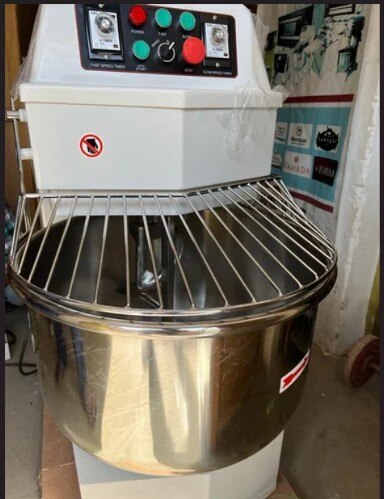 | Spiral Dough Mixers Material Stainless Steel (SS) Bowl Type Fixed Bowl Usage/Application Commercial / Large Power Source Electric Automation Grade Automatic Capacity 60... View product → |
 | Spiral Mixer INTELLIGENT DIGITAL CONTROL PANEL, EASY TO CHANGE THE AUTOMATIC MODEL, MANUAL MODE, SLOW SPEED, FAST SPEED, SAFETY GUARD. View product → |
 | Spiral Dough Mixers Material Stainless Steel (SS) Type Volumetric Usage/Application Commercial / Large Power Source Electric Used for Making Pizza, Bread,... View product → |
 | Spiral Dough Mixers Material Stainless Steel (SS) Usage/Application Commercial / Large Power Source Electric Automation Grade Automatic Capacity 20 Kg Used for Making... View product → |